Communication moved to People, and the PMP outline stopped talking about channels
The PM Architect7 min readConcepts
Communication is not new material in the PMP outline. It moved house. In the January 2021 outline it was the second task of the Process domain and was called manage communications. In the July 2026 outline it is the eighth task of People, the domain that weighs 33 per cent, and it is called plan and manage communication.
A move looks like a minor change, and yet the task did not arrive at the new house the same as it left. It is worth looking at what stayed behind.
What changed on the way
Let’s look first at what was there. In 2021 the task had four enablers. Analyze the communication needs of all stakeholders, determine methods, channels, frequency and level of detail for each of them, communicate project information and updates effectively, and confirm that communication is understood and feedback is received.
Now it has six. Define a communication strategy. Promote transparency and collaboration. Establish a feedback loop. Understand reporting requirements. Create reports aligned with sponsors and stakeholder expectations. Support reporting and governance processes.
What disappeared strikes me very forcefully. The words channels and frequency are gone. That does not mean they have stopped mattering, because the outline makes clear that enablers are illustrative examples, but it does shift the emphasis. The 2021 outline described a mechanics of sending. The 2026 outline describes a relationship with rules, and perhaps that is why it ended up in People, although that is our own reading, because the document does not explain the move.
What each enabler asks for
Strategy comes first. Lynda Bourne, in a paper for the 2010 PMI global congress, says it starts by understanding which stakeholders the team must invest more effort in, because standard reports are enough for the rest. Then you decide why you are speaking to each one and what result you expect. Channels only show up here, and Bourne distinguishes three mechanisms, interactive, push, where reports belong, and pull, with information available for each person to look for when they need it.
Promoting transparency and collaboration is the least mechanical of the six. No document fulfils it, and the outline does not say how either. In our judgement, in a question you recognise it in the alternative that puts bad news on the table before someone discovers it.
The feedback loop deserves a pause, because this is where the whole task is decided. Bourne says it in one dry sentence. Reporting and communicating are not the same. Communication runs in two directions, and for it to be complete, the sender needs to know, at the very least, that the message was received and understood.
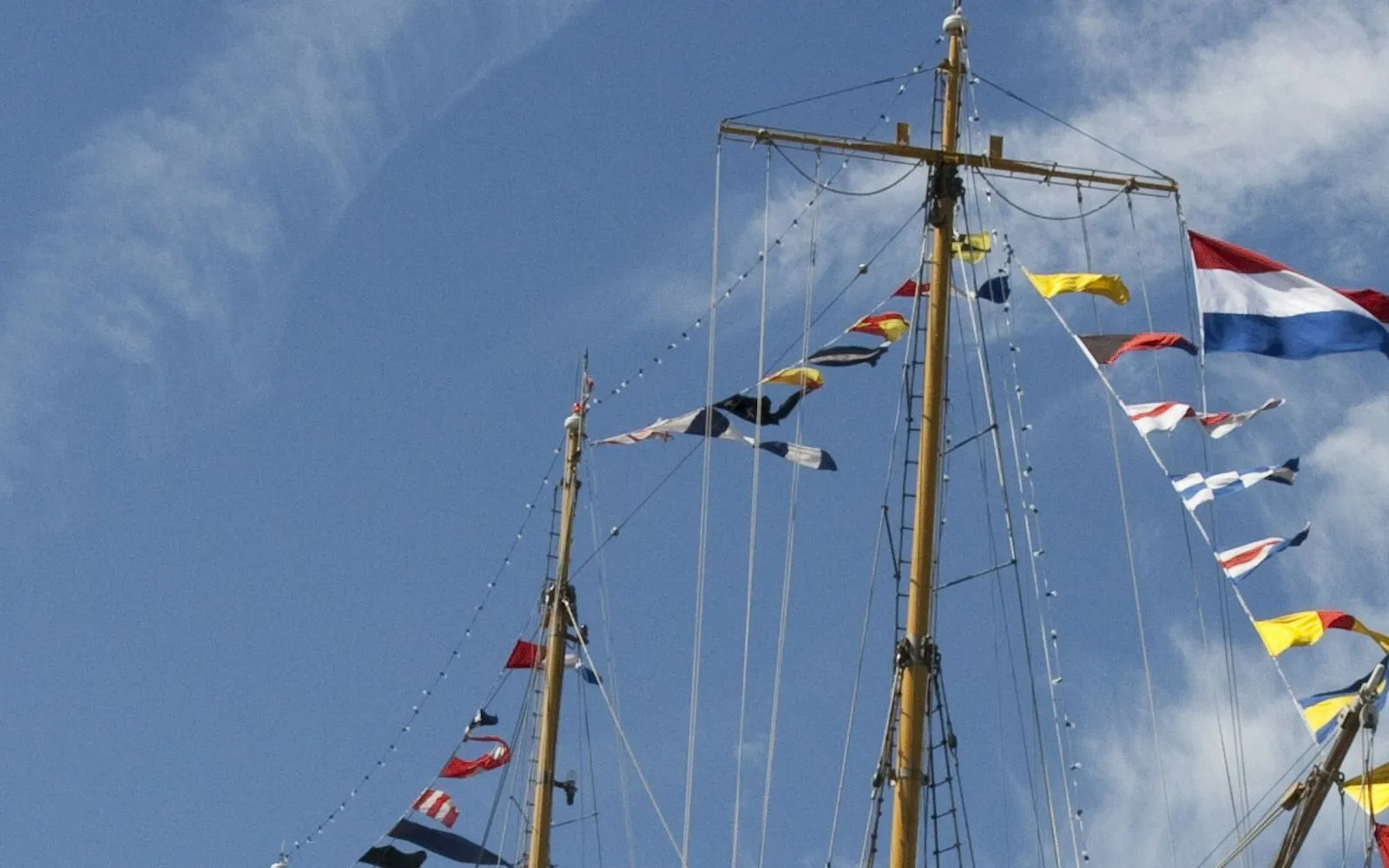
Let’s think of two ships in sight of each other. For a long time they spoke with flags, and a signal hoisted was not yet a message. The old signalling manuals describe the answering pennant, which the receiving ship raises halfway when it has seen the signal and all the way up when it has understood it. Until that pennant rises, the ship that asked knows nothing. It can have the cleanest flags in the fleet and be talking to itself. A flawless report sent on Friday at six in the evening is a flag hoisted, and the feedback loop is the habit of watching the other ship’s mast.
The last three enablers form a family. Understanding reporting requirements is finding out what each audience needs to know and what the organization demands of it. Creating aligned reports is answering that, and notice that it says expectations, not available data. Supporting reporting and governance processes connects your report with the decisions that depend on it, and there the task looks over into the Business Environment domain. Bourne adds a practical piece of advice, because she observes that the communication plan is rarely reviewed or followed. Her remedy is to put the important communication activities in the schedule, with their resources, so that they are reported on like any other activity.
Where the border with stakeholders lies
Tasks 4, 5 and 6 of People are the stakeholder tasks, and we took them apart in the post on the three tasks. The fourth, engage stakeholders, is the one most easily confused with this one, because it includes an enabler that asks you to analyze and tailor communication to stakeholder needs.
Both tasks and their enablers are those of the official PMP outline, July 2026 edition. The border and the two points of contact are our own reading.
The difference, as we read it, lies in the object. Task 4 works on the person, who they are, what matters to them and how much they trust you. Task 8 works on the system through which information travels, what strategy governs it, what reports it produces and how the answer comes back. Task 4 tells you which conversation you owe to whom. Task 8 makes sure that conversation happens and that someone finds out how it ended.
How to spot it in a question
The situation below is our own. The sponsor complains of hearing about problems late, even though they receive a twenty-page report every week. The alternatives offer to send it twice a week, add a risk summary, review the stakeholder analysis, or sit down with the sponsor to understand what they need to know and agree how and when it arrives and how they confirm receiving it.
The last one belongs to task 8, because it deals with reporting requirements and feedback. Sending it more often is hoisting more flags. The risk summary may be part of the solution, but you decided it without asking. And reviewing the analysis would be the answer if you did not know who this person is, but you know them perfectly well.
Change one detail and the task changes. If the scenario presents a newly arrived manager, with influence and no relationship with the project, you are in task 4. If two team members clash because each understood something different, look first at the conflict task. And if you wonder how much all this weighs in the whole, we set it out in what the PMP exam looks like in 2026.
The mast opposite
Hoisting a flag takes a minute and gives the feeling of duty done. The hard part comes afterwards, when you have to stay watching the other ship without knowing what it will answer. Perhaps that is why the outline moved this task to People. Someone who truly communicates does not finish when they send. They finish when the pennant rises on the other side.
Join the waitlist
At The PM Architect we write the PMBOK study guides in five languages, with real classroom cases and exercises that come with an explanation. They will be free. Leave your email on the home page and we’ll let you know the moment they’re ready.